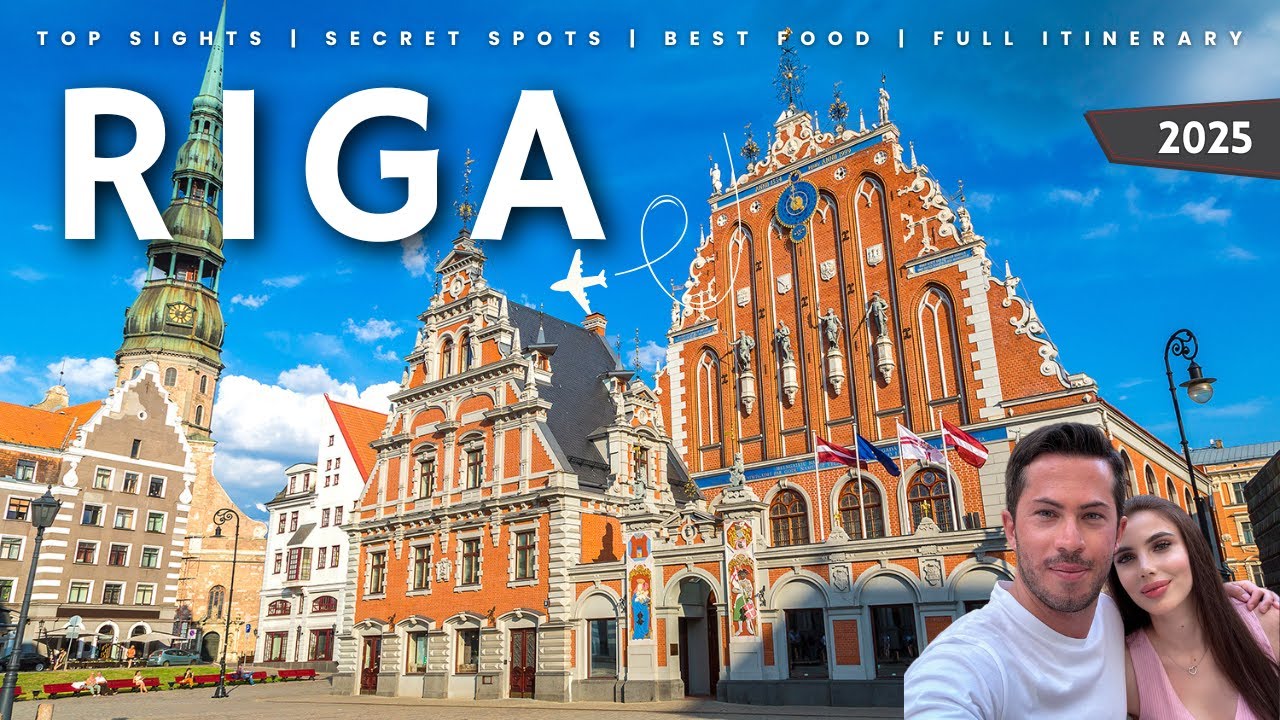
Skip the tourist traps. These are the ones worth your time.
 Flavia Voican · Updated 2026-04-12 · Budget: ~55-85 EUR/day
Some links are affiliate links. Learn more.
~55-85 EUR/day. That covers a mid-range hotel, meals at local restaurants (not tourist traps), public transit, and 1-2 paid attractions. Budget travelers can do it for 30-40% less by choosing hostels and street food.
September is the sweet spot — good weather, fewer crowds, lower prices. See our month-by-month guide for details.
3-day itinerary · Best time to visit · Where to eat · Airport transit · Europe Guide
Was this helpful?
About · Contact · Editorial Policy · How We Make Money
Navigate Riga's attractions & highlights with this interactive map. Click to explore the city.
See what locals eat in Riga, from street food stalls to proper sit-down things-to-do.
Latest travel news and upcoming events in Riga.
Loading travel news…
Riga Central Market, a UNESCO-listed complex of 1930s wooden pavilions, spans 10 hectares and hosts 1,200 vendors. It’s the largest wooden structure globally, built on the Dzirnavu Lake site. Why visit?
It’s not just a market—it’s a living archive of Latvian trade, with 70% of vendors selling locally sourced goods. Entry is free, but expect to spend €15–€25 for smoked fish, rye bread, and traditional kūčkas. Open daily 8am–8pm; best visited on weekdays before 10am to avoid crowds.
Take bus #1, #2, or #3 from Riga Central Station to the market’s eastern entrance. Insider tip: The market’s northern pavilion (Pavilion 12) serves the best smoked salmon at €12/100g—ask for the "Riga-style" preparation, which uses juniper and birch smoke.
Vecrīga, Riga’s medieval core, spans 1.5 square kilometers with 1,500+ buildings, including 300 listed monuments. It’s the heart of Latvia’s cultural identity, where Hanseatic-era architecture meets modern cafes. Why visit?
It’s not just pretty—it’s a functional city, with 80% of residents living here year-round. Entry is free, but explore the 12th-century St. Peter’s Church (€3) and the House of the Blackheads (€5). Open daily 9am–6pm; best visited at dawn for empty streets and golden light.
Walk from Riga Central Station via tram #2 or #3 to the Latvian National Museum of Art. Insider tip: The alley behind the House of the Blackheads (Mazā Dzirnavu iela) has the best street art—look for the 2022 mural by local artist Mārtiņš Pētersons, hidden behind a café.
The Latvian National Museum of Art (LNMA), housed in a 1901 Beaux-Arts building, holds 200,000+ works, including 19th-century Baltic German paintings and 20th-century Latvian art. Why visit? It’s the only museum in the Baltics with a dedicated section on the 1918–1920 Latvian War of Independence.
Entry is €8 (€5 for students), open Tuesday–Sunday 10am–6pm. Best visited on Tuesday mornings when the museum is quiet. Take bus #1 or #2 from Riga Central Station to the museum’s entrance.
Insider tip: The museum’s basement café serves a €3.50 "Museum Special"—a Latvian rye bread sandwich with smoked salmon, available only during exhibitions.
Pārdaugava Market, a 200-meter-long covered market near the Daugava River, has 30+ vendors selling fresh produce, cheese, and baked goods. Why visit? It’s a working-class hub, with 70% of vendors being Latvian women over 50.
Entry is free, but expect to spend €5–€10 for a traditional kūčkas (sweet bread) or €8 for a local cheese platter. Open Monday–Saturday 7am–6pm; best visited on Saturday mornings for the most vibrant atmosphere. Take tram #3 from Riga Central Station to the Pārdaugava stop.
Insider tip: The market’s oldest vendor, 78-year-old Līga, sells the best smoked eel at €10/100g—ask for it "Riga-style" (with dill and lemon).
Ķemeri National Park, 90 minutes by train from Riga, features 100+ hectares of pine forests, dunes, and a 19th-century spa town. Why visit? It’s the only coastal national park in Latvia, with 15% of Latvia’s bird species.
Entry to the park is free, but the spa town requires a €10 entry (includes access to the thermal pool). Open daily 9am–6pm; best visited in May or September for mild weather and fewer tourists. Take train #10 from Riga Central Station to Ķemeri Station, then a 10-minute walk to the park.
Insider tip: The park’s "Dune Trail" (marked by red flags) is rarely visited—follow it to the hidden beach, where locals swim in the Baltic Sea year-round.
Riga Zoo, established in 1899, spans 12 hectares with 1,500+ animals across 100+ species. Why visit? It’s the oldest zoo in the Baltics, with a focus on conservation—30% of its animals are endangered.
Entry is €10 (€8 for students), open daily 9am–6pm. Best visited on weekdays before 11am to avoid crowds. Take bus #10 from Riga Central Station to the zoo entrance.
Insider tip: The zoo’s "Zoo Café" serves a €4.50 "Zoo Special"—a Latvian sausage with pickled vegetables, available only during summer months.
Privacy by default. First-party analytics only. No remarketing cookies, no data broker pixels. What you read here is for you.
Transparency on money. Booking links may be affiliate. Our edit doesn't change based on commission — we recommend what the data supports.
Primary sources over aggregators. Prices from airline/rail/hotel APIs; seasonality from tourism boards; safety stats from national archives where possible.
Made by 360 Business Tour, the agency that helps hotels and venues get found on Google and in AI answers.